
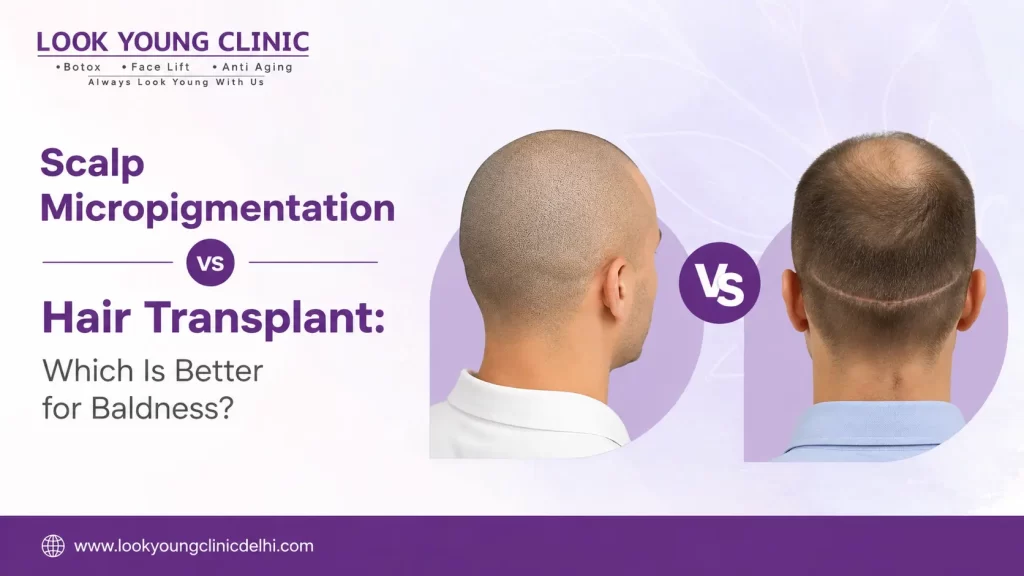
Losing hair is one thing, but figuring out what to actually do about it is where most people get stuck. Two options keep coming up in every conversation scalp micropigmentation and hair transplant. At Look Young Clinic, this is one of the most common questions we hear from people walking in for scalp micropigmentation in Gurgaon — “Which one is actually better for me?”
Honestly, there’s no one-size-fits-all answer. It depends on your age, how much hair you’ve lost, your budget, and even how much patience you have for the whole process. Let’s break both down in plain words so you can actually decide instead of just getting more confused.
What Is Scalp Micropigmentation, Really?
Think of it like a very precise, very controlled form of tattooing. Tiny dots of pigment are placed on the scalp to recreate the look of tiny hair follicles. Done well, it gives the illusion of a closely shaved head or, in areas with thinning hair, makes your existing hair look thicker and denser.
It’s not surgery. There’s no cutting, no stitching, no waiting months to see if it “takes.” A few sessions, spaced a week or two apart, and you’re done.
A lot of people search for scalp micropigmentation near me expecting it to be some experimental new-age thing, but it’s actually been around for over a decade now and has gotten a lot more refined. The pigments used today are made specifically for scalp work — they don’t turn blue or green over time like old-school tattoo ink used to.
What Is a Hair Transplant?
A hair transplant is a surgical procedure. Hair follicles are taken from a donor area (usually the back of your head, where hair is genetically resistant to balding) and implanted into the thinning or bald areas. Over the next several months, those follicles grow real, living hair.
This is the option people usually think of first because it gives you actual hair back, not just the appearance of it.
The Honest Comparison
Recovery time: SMP has basically zero downtime — you could technically go back to work the same day. A hair transplant needs proper rest, and you’re looking at a week or two before you feel semi-normal, and months before the transplanted hair actually starts growing and looking natural.
Pain and invasiveness: SMP feels similar to a tattoo — a bit of discomfort, nothing dramatic. A transplant involves anesthesia, tiny incisions, and some soreness or swelling for a few days after.
Results: This is where it gets interesting. SMP gives you the appearance of a buzzed head or denser hair — great if you’re okay with keeping your hair very short, or if you just want that “fuller” look without growing anything new. A transplant actually regrows hair you can style, grow long, and touch like real hair, because it is real hair.
Who it suits: If you’re dealing with advanced baldness, don’t have enough donor hair for a transplant, or simply want a low-maintenance solution without surgery, SMP usually wins. If you have decent donor hair left and want your natural hairline and texture back, a transplant makes more sense.
Maintenance: SMP needs a touch-up every few years as pigment fades slightly. A transplant, once it’s grown in, behaves like your own hair — no special upkeep beyond normal hair care.
Cost: This is one of the biggest deciding factors for most people. The scalp micropigmentation cost in India is significantly lower than a hair transplant in most cases, since it’s a non-surgical procedure that doesn’t need an operating room, anesthesia, or months of follow-up visits. A hair transplant, depending on the number of grafts needed, can cost multiple times more.
Can You Combine Both?
Yes, actually — and this surprises a lot of people. Some of our clients at Look Young Clinic use SMP after a hair transplant to add extra density in areas where the transplant alone didn’t give full coverage, or to camouflage scars from an older, less advanced transplant technique. It’s not always either-or.
So, Which One Should You Pick?
Ask yourself these honestly:
- Do I want real, growing hair, or am I fine with the appearance of a fuller head?
- Am I comfortable keeping my hair short-ish long term?
- What’s my budget, realistically?
- How much time can I give to recovery and follow-ups?
If you want a quicker, budget-friendly, low-maintenance fix — SMP is usually the smarter pick. If you want your actual hair back and don’t mind the surgery, recovery, and higher cost — a transplant is worth considering.
Either way, don’t decide based on a random Instagram reel or your cousin’s “guy who did it.” A proper consultation matters more than people realize, because your hair loss pattern, scalp condition, and skin type all play a role in what will actually look natural on you.
Why People Choose Look Young Clinic for This
We get it — this decision feels bigger than it is because it’s literally on your head, visible every single day. At Look Young Clinic, we sit down with you, look at your actual scalp and hair loss pattern (not a generic chart), and tell you honestly which option will genuinely work for you — even if that means telling you SMP isn’t the right fit and something else is. If you’ve been searching for a reliable scalp micropigmentation clinic, we’d rather give you an honest answer than a sales pitch.
FAQs
It is long-lasting, but not permanently permanent. The pigment gradually fades over several years, and most people need a light touch-up session every 4 to 6 years.
When performed properly using the right pigment shade and dot pattern to match your skin tone, SMP can look very natural and resemble real hair stubble. The final result largely depends on the skill and experience of the practitioner.
SMP is generally more affordable than a hair transplant because it does not involve surgery, hair grafts or an extended recovery period.
Yes, SMP can be suitable for women experiencing thinning hair or visible scalp areas. It is not limited to men with receding hairlines.
Most people need 2 to 4 sessions, usually spaced about one or two weeks apart, to gradually build the desired density and achieve the final result.
Transplanted hair follicles are generally permanent because they are taken from areas resistant to balding. However, the surrounding non-transplanted hair may continue to thin over time.
 FSC India